A duvet is chosen for warmth, but warmth is not a single property. Filling, fill weight, construction and ticking together decide how warm, how light and how breathable a duvet is, and how it holds up in the wash. For a buyer, then, the question is not which filling is best, but which combination suits your customer, your season and your price point.
On our four fully automatic duvet lines we make duvets with synthetic and nano gel fibre, and with the natural fillings wool and bamboo (our duvet range). Below: what each filling does, then warmth and seasons, construction and care, with a comparison table to sum up. Choosing pillows as well? Read which pillow filling suits your customer.
Four fillings, four characters
Synthetic fibre
The everyday duvet and the backbone of almost every range. Hollow, siliconised polyester fibre traps air, insulates and stays resilient. A fibre duvet is light, affordable and usually washable at home, and it can be made in any warmth: the fill weight decides whether it becomes a summer or a winter duvet. Because it can be washed hot, it is also the usual choice for people with a house dust mite allergy. The fibre itself absorbs little moisture, so a breathable ticking matters to let the night’s moisture escape.
Nano gel fibre
A very fine synthetic fibre with a soft, downy drape. The duvet settles softly around the body, feels light and airy, and is as easy to wash as a fibre duvet. That makes nano gel fibre a strong choice for the mid and upper segments: the feel of down with the ease of synthetic – also for customers who deliberately avoid animal-based fillings.
Wool
Wool absorbs moisture as vapour and releases it again, so the climate under the duvet stays dry. Wool therefore feels warm without becoming stuffy: a filling for people who perspire easily at night, and for natural and premium collections. A wool duvet drapes flatter and weighs more than down. It mainly wants airing; wash it only if the label allows.
Bamboo
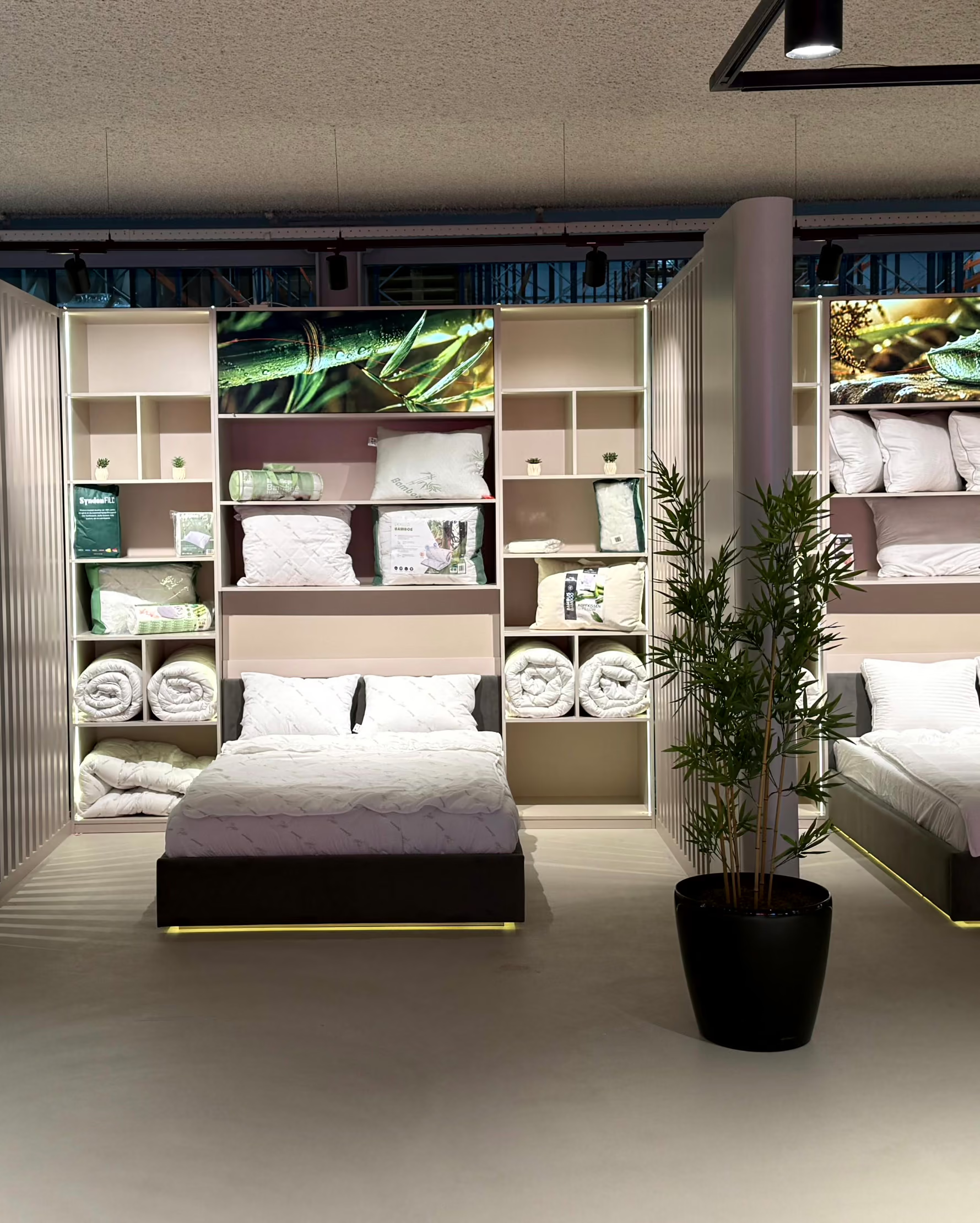
A bamboo filling feels cool and smooth, absorbs moisture and is light: popular with warm sleepers and in summer. It is usually a fibre made from bamboo cellulose (viscose), often blended with synthetic fibre. Bamboo is generally washable on a delicate programme.
Bamboo on the label
In the EU, the composition label must use the fibre names of the EU textile regulation; for a fibre made from bamboo, that is usually viscose. The US and Canada have rules of their own. We align labels and product claims with the market you sell in.
And down and feather?
Down and feathers remain the classic natural filling: very light for their warmth, lofty and breathable, and long-lasting if well cared for. They do need thorough drying and, in many markets, a certification of origin such as Downpass. If you want a natural down filling in your programme, talk to us; for natural, high-value concepts there is also our own brand Mont Blanc.
Warmth and seasons
How warm a duvet is depends mainly on the filling and the fill weight, usually given in grams per square metre. Wool is warm at a moderate weight, bamboo feels cooler, and synthetic fibre can be made in any warmth. Many suppliers work with warmth classes; in the United Kingdom the tog rating is the standard, a measure of insulation: the higher, the warmer.
- Summer duvet: light and thin, with little filling; bamboo fits here too. In the UK around 4.5 tog.
- All-year duvet: a medium weight for most of the year; in the UK often around 10.5 tog.
- Winter duvet: more filling, or wool; in the UK around 13.5 tog.
- Four-seasons duvet: two duvets – a light summer duvet and a medium one for spring and autumn – joined with press studs for winter. In the UK, 4.5 + 9 = 13.5 tog is a familiar combination.
Size differs by market as well. In Germany and Scandinavia couples often sleep under two single duvets; in the Netherlands and France, more often under one large duvet. The common sizes per country are in the size guide.
Construction: boxes, channels and stitching
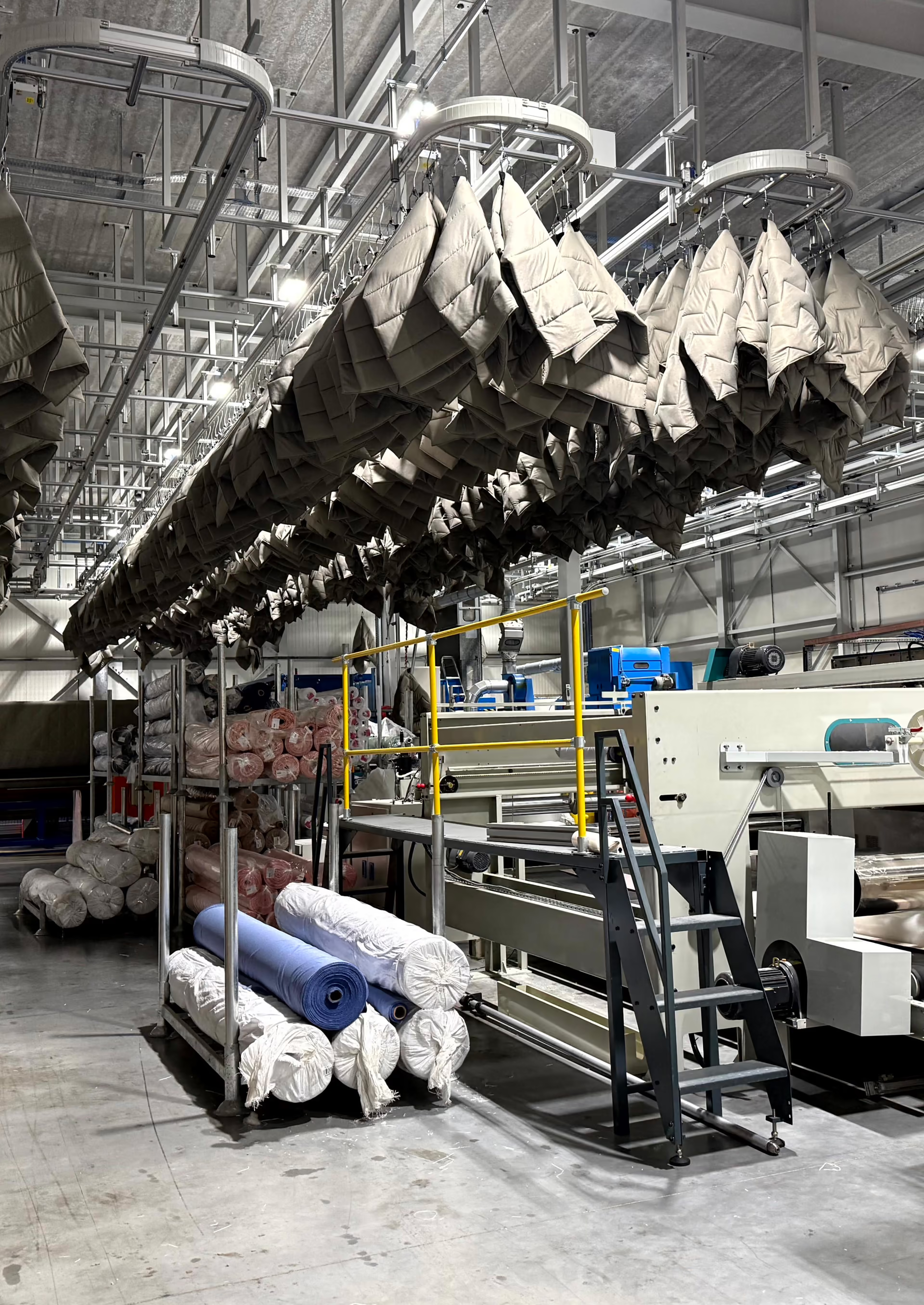
The ticking of a duvet consists of two layers of fabric. The quilting pattern keeps the filling in place, so that it is still evenly spread after years of use. The common constructions:
- Box-quilted: top and bottom layers are stitched through in a pattern of squares. The filling stays in place box by box; along the seams the duvet is thinner.
- Channels: long compartments running lengthwise. The filling can shift slightly within a channel and is spread again by shaking.
- Baffle boxes: fabric walls between the top and bottom layers, so there are no stitched-through seams and the filling reaches its full height everywhere. A construction for warm duvets, especially with down.
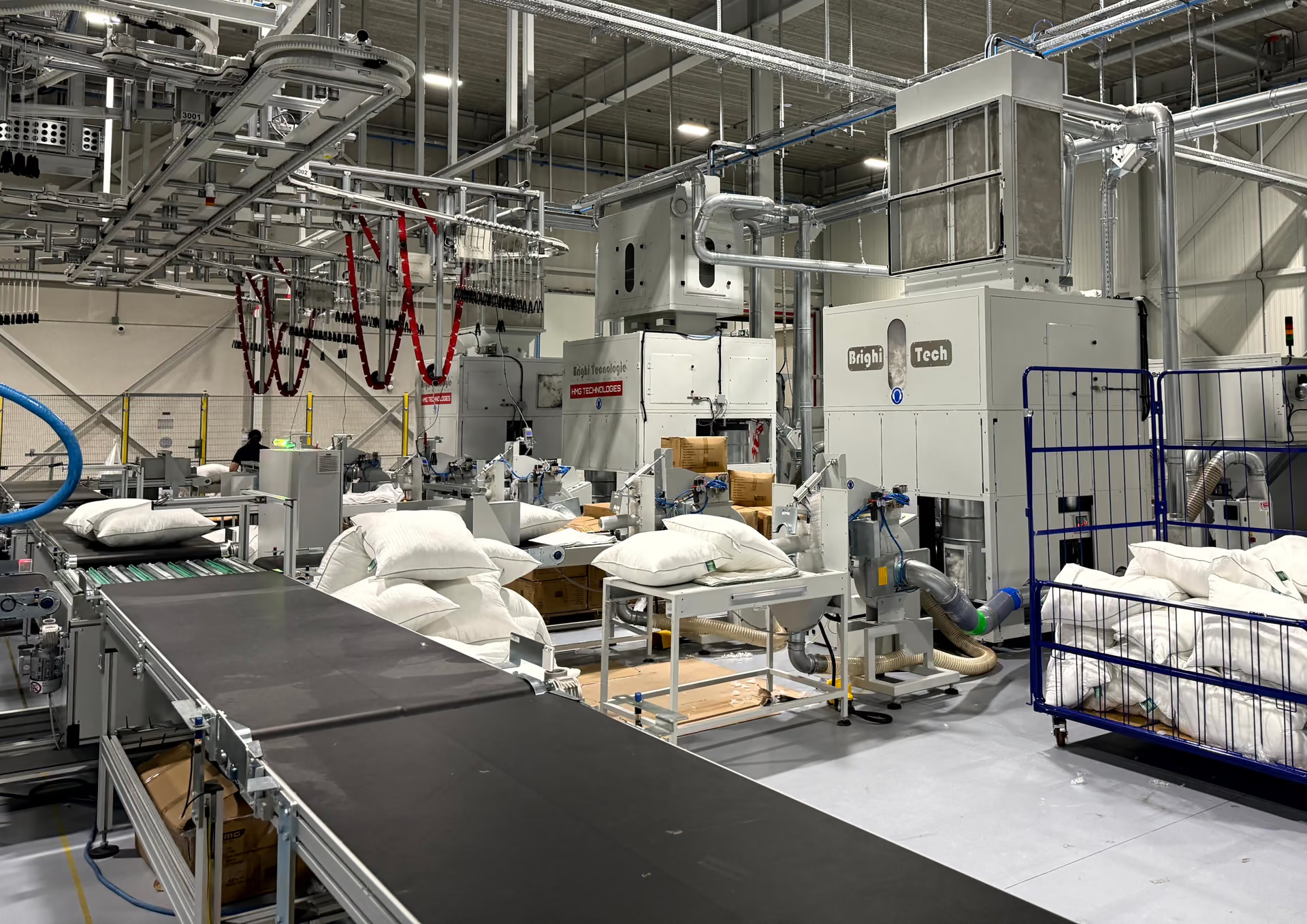
On our four duvet lines, duvets are quilted in boxes and filled and weighed automatically, so every duvet in an order has the same fill weight. See how in the duvet line in 3D. The ticking counts too: a densely woven fabric keeps the filling in, a breathable one carries moisture away. We choose it with you, article by article.

Care and lifespan
Synthetic fibre is often washable at 40 to 60 °C, nano gel fibre usually at 40 °C on a delicate programme – always according to the label – and both can be tumble-dried on low heat with dryer balls. A large duvet needs a large drum. Bamboo is usually washed on a delicate programme. Wool and down rarely need washing: airing is the main care, and washing only as the label says.
As a rule of thumb, a synthetic duvet lasts around five years, a wool or down duvet often ten years or more. All guidance per filling is in use and care. For your customer it belongs on the care label and the insert card, in the languages of your market; we draw up those texts with you, market by market.
The fillings in one table
| Filling | Warmth and climate | Weight and drape | Washing | Best suited to |
|---|---|---|---|---|
| Synthetic fibre | Any warmth; neutral climate | Light, resilient | Often 40–60 °C, per label | Every channel, allergy-prone sleepers, hotels |
| Nano gel fibre | Warm and airy | Very light, soft downy drape | Often 40 °C, delicate | Mid and upper segments |
| Wool | Warm and dry; regulates moisture | Heavier, flatter drape | Air it; wash only per label | People who perspire easily; natural collections |
| Bamboo | Cool and fresh | Light and supple | Often delicate | Summer and warm sleepers |
| Down and feather | Very warm for its weight; breathable | Very light and lofty | Rarely; dry thoroughly | Premium and natural concepts |
Putting together a duvet programme? Tell us which fillings, warmth classes and sizes you need, and for which market. We will make a proposal, with samples.
Request a quote