A great deal of packaging says ‘sustainable’. For a buyer, the question is not whether a supplier uses the word, but what lies behind it — and what the supplier can show when your own customers, your management or a regulator asks.
At HMG, sustainability is a strategic pillar, and responsibility — sustainable and transparent production — is one of our five core values. For us, transparent also means naming what is there, and nothing more. So this article sets out concretely where sustainability sits in our business: in the building, the energy, the fibres, the way we produce and the route to your warehouse. And what you, as a buyer, can request from us.
An overview is on our Sustainability page; here we look at what it means for your purchasing.
- Certified, energy-efficient building
- GPR 8.0
- Solar panels on the roof
- 1,152
- Battery storage
- 4 × 239 kWh
- Production in the Netherlands
- 100%
The building: a GPR score of 8.0
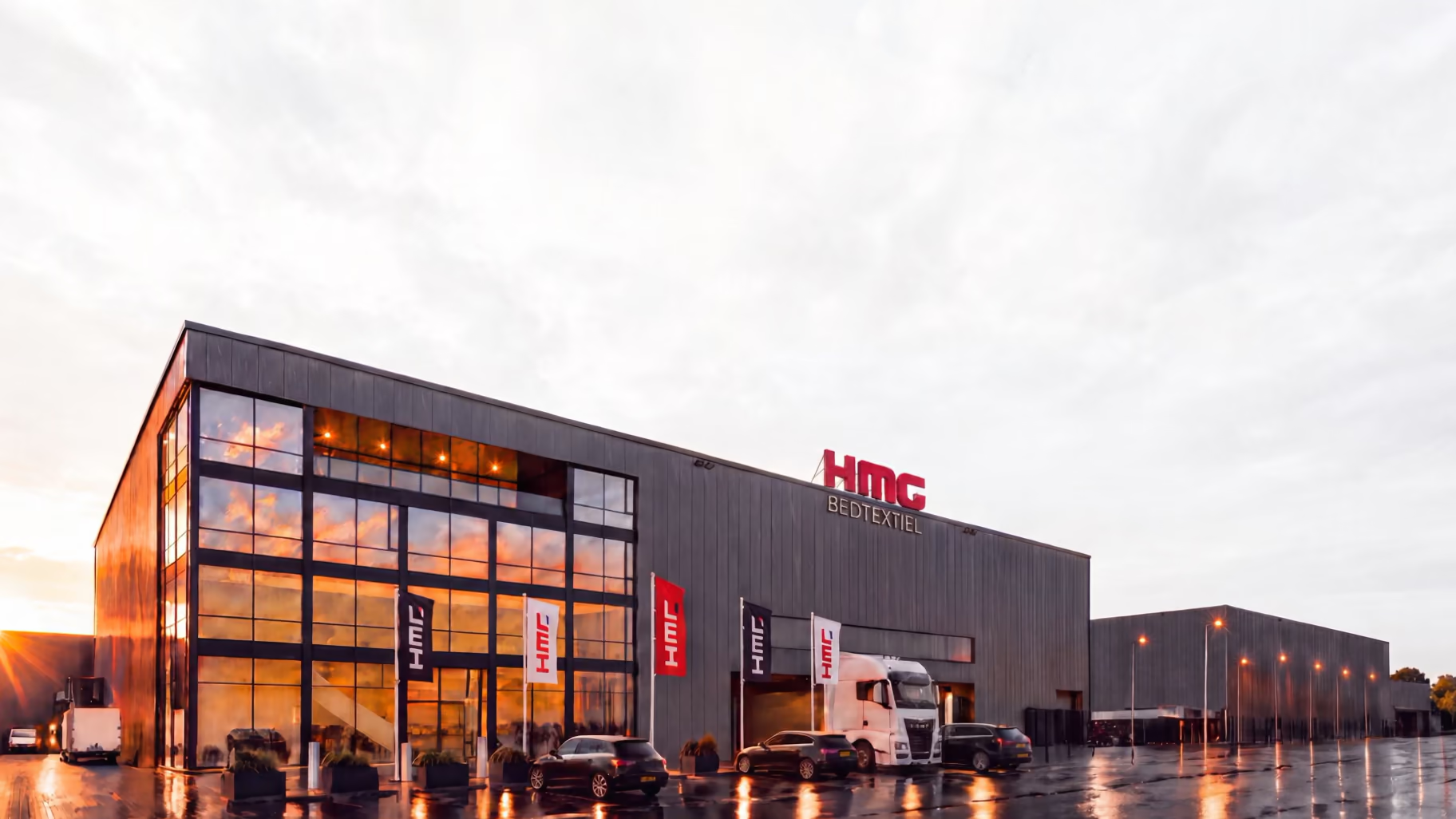
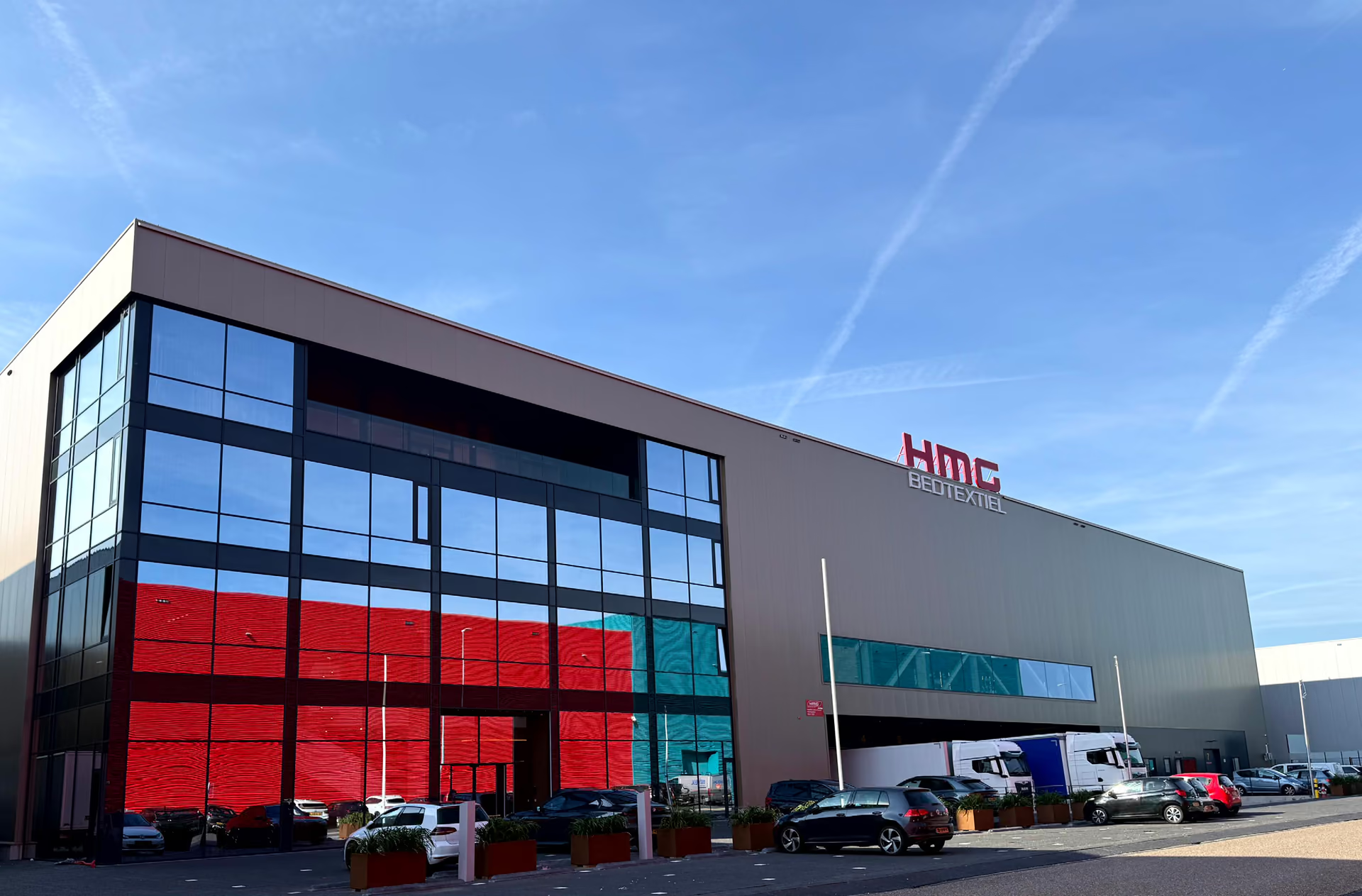
Our headquarters and factory on Park Forum in Eindhoven form a single 12,500 m² building. Construction began in 2024; the building is energy-efficient and holds a GPR certification of 8.0.
GPR Gebouw is a Dutch method for measuring the sustainability of a building. A building receives a score on a scale of 10, across five themes: energy, environment, health, quality of use and future value. The advantage for you: it is a score reached by a fixed method, not a claim of our own. You can request the certificate from us.
Energy: solar panels, batteries and charging points
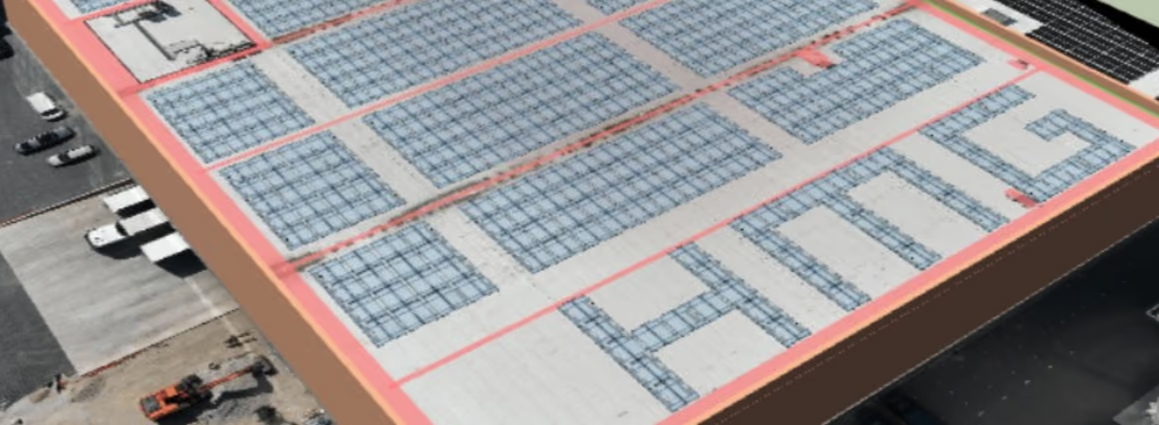
On the roof are 1,152 solar panels, a solar installation of 900 kWh. Seen from above, they spell the letters HMG. The electricity they generate is stored in our own batteries — 4 × 239 kWh of storage capacity — so that we can use solar power when the sun is not shining, too. We also have charging infrastructure for electric vehicles.
Solar power and battery storage are 2026 milestones: they arrived together with our showroom. What we do not do is convert these figures into a saving per pillow or duvet. Why not is explained further down.
Fibres: GRS and other certifications
Sustainability starts with what is inside a pillow or duvet. We work with sustainable and certified fibres, including fibres certified to the Global Recycled Standard (GRS). This international, voluntary standard from Textile Exchange records how much recycled material a product contains, tracks that material through the supply chain and also sets requirements for social conditions, environmental performance and the use of chemicals.
Alongside synthetic and nano gel fibres, we offer natural fillings: wool and bamboo for duvets and natural fillings for pillows — among others for our own brand Mont Blanc, which has stood for natural, high-value bedding for more than 28 years.
A tip for your briefing
A fibre certificate says something about a specific material in a specific product. So ask per article which certified fibres are available. If you want to name a standard such as GRS on your packaging, that standard’s own rules apply; we agree this with you per programme.
Efficient production is responsible production
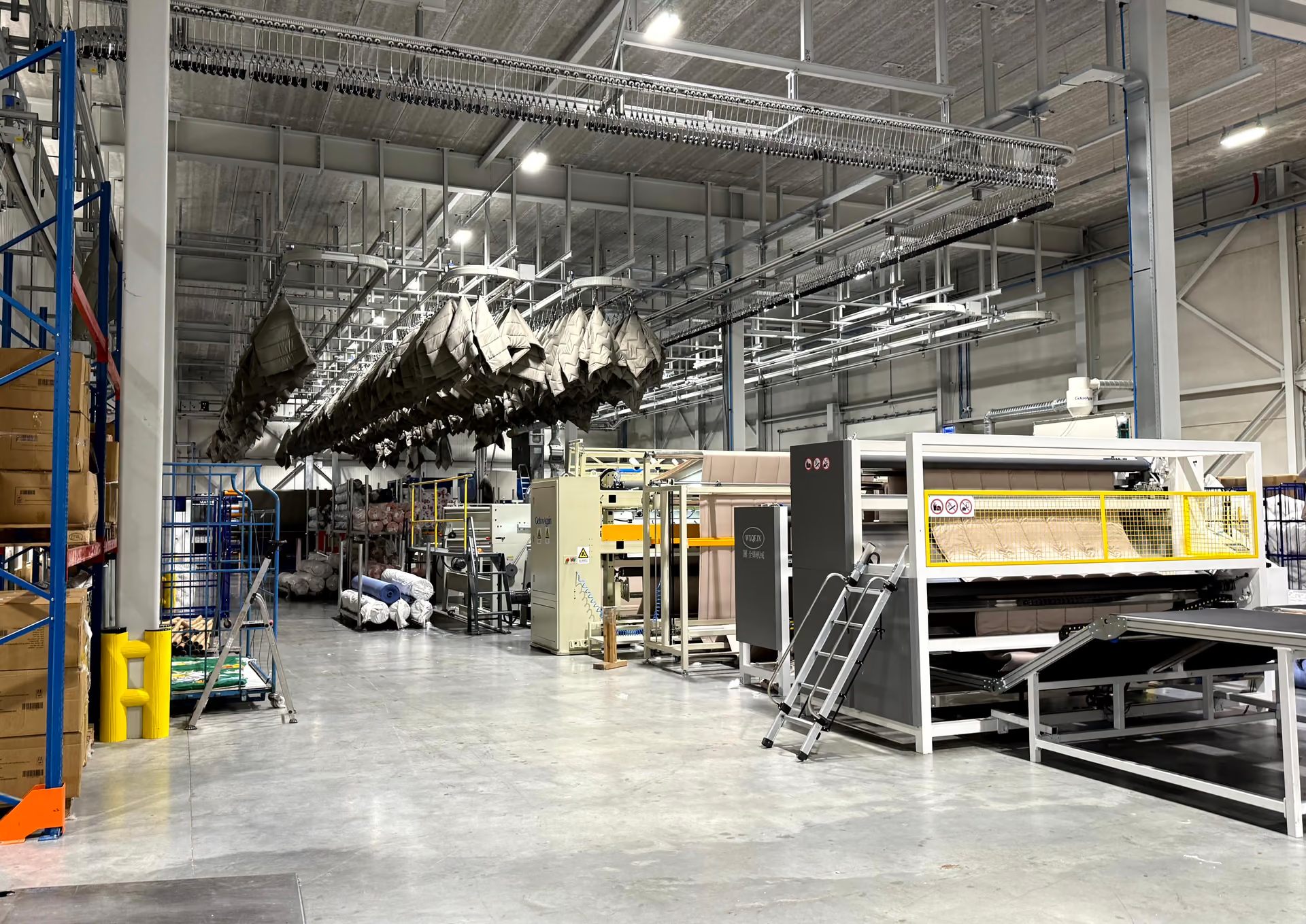
Producing sustainably also means producing well. Our factory is highly automated, and that has a sustainable side that is mentioned less often.
- Precise filling — high-precision fibre opening and automated filling and weighing make sure every product gets the agreed filling: no more material than needed, and no less than promised.
- Right first time — quality control at every production step catches deviations during production, not at your end. A product that is right does not have to be remade or sent back.
- Traceable by batch — origin and processing stay visible; if a question arises, it can be traced back to a single batch.
- Compactly packed — roll-pack and vacuum packaging make products more compact, so more fits into a single shipment.
How the steps in the factory fit together is shown on our Production page.
Made in the Netherlands, close to your market
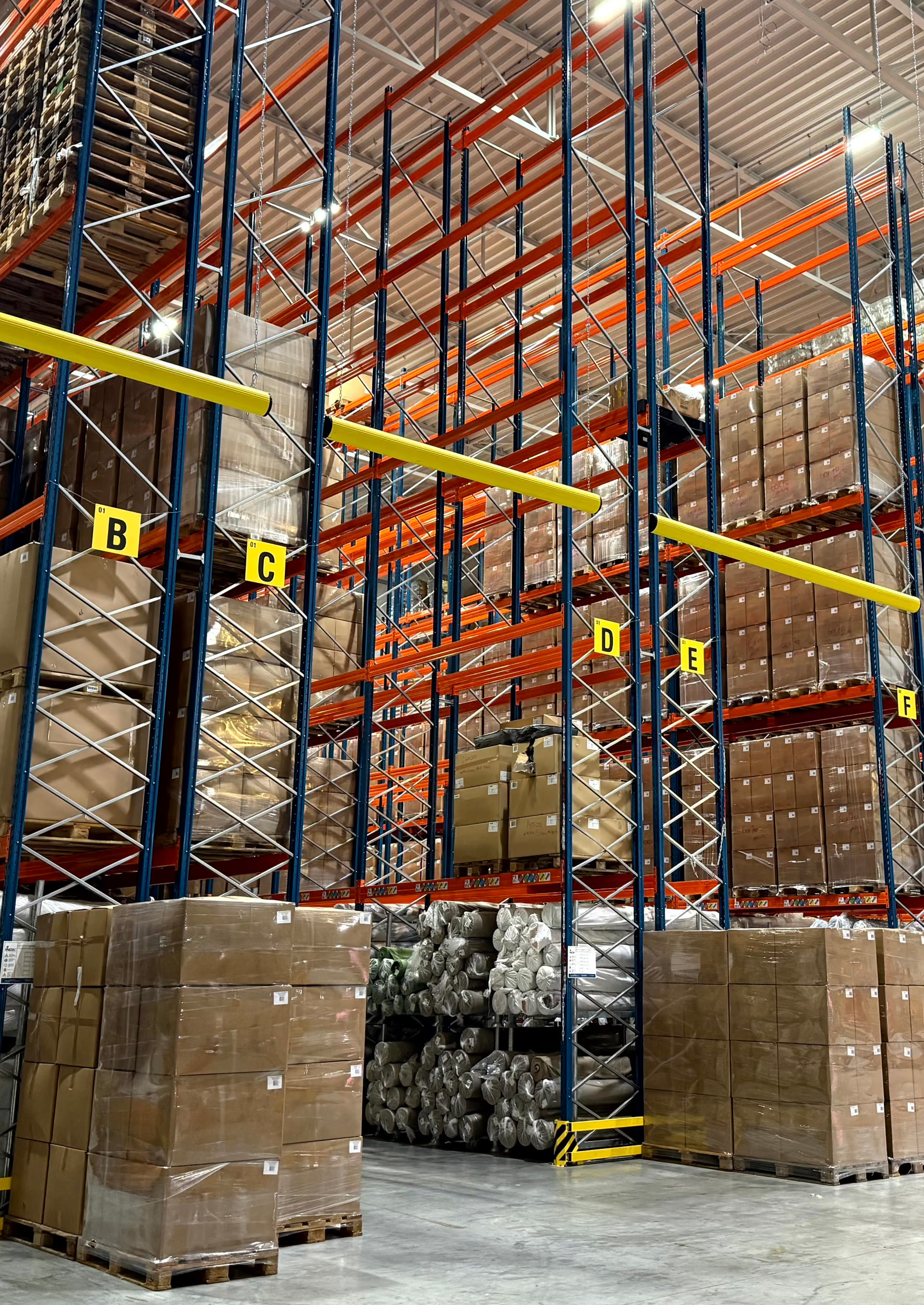
Our production takes place 100% in the Netherlands. For customers in Europe, that means shorter transport routes: from Eindhoven to your warehouse, rather than a container across the ocean. An independent European supply chain is one of the pillars of our strategic roadmap, and with our own warehouse of 6,000 pallet positions, stock is close to the market.
What production in the Netherlands means for lead times, flexibility and security of supply is the subject of why made in the Netherlands matters.
What you can request from us
Sustainability only becomes useful once you can demonstrate it to your own customers. This is what you can request from us:
- The GPR certificate of our building on Park Forum.
- The certificates for the certified fibres in your article, such as GRS — per article.
- Test reports: we have our products tested in laboratories for the markets we supply.
- Information on the traceability of your delivery, per batch.
- Your own requirements: does your organisation ask for a specific label or test, such as OEKO-TEX or Downpass? Mention it in your briefing and we will tell you per product what we can demonstrate.
An overview of what we can demonstrate is on our Certificates page. The documents that belong to your products come with the quote.
Why you will not find CO₂ figures here
A CO₂ figure per pillow or duvet depends on material, weight, packaging and transport, and it has to be substantiated. European rules on environmental claims towards consumers are also becoming stricter: Directive (EU) 2024/825 prohibits generic claims such as ‘environmentally friendly’ that are not substantiated. That is why we name only what we can demonstrate here — and agree the claims on your packaging with you per programme.
Would you like to know which certificates and documents we can supply for your article? Mention the product and the market in your request.
Request a quote