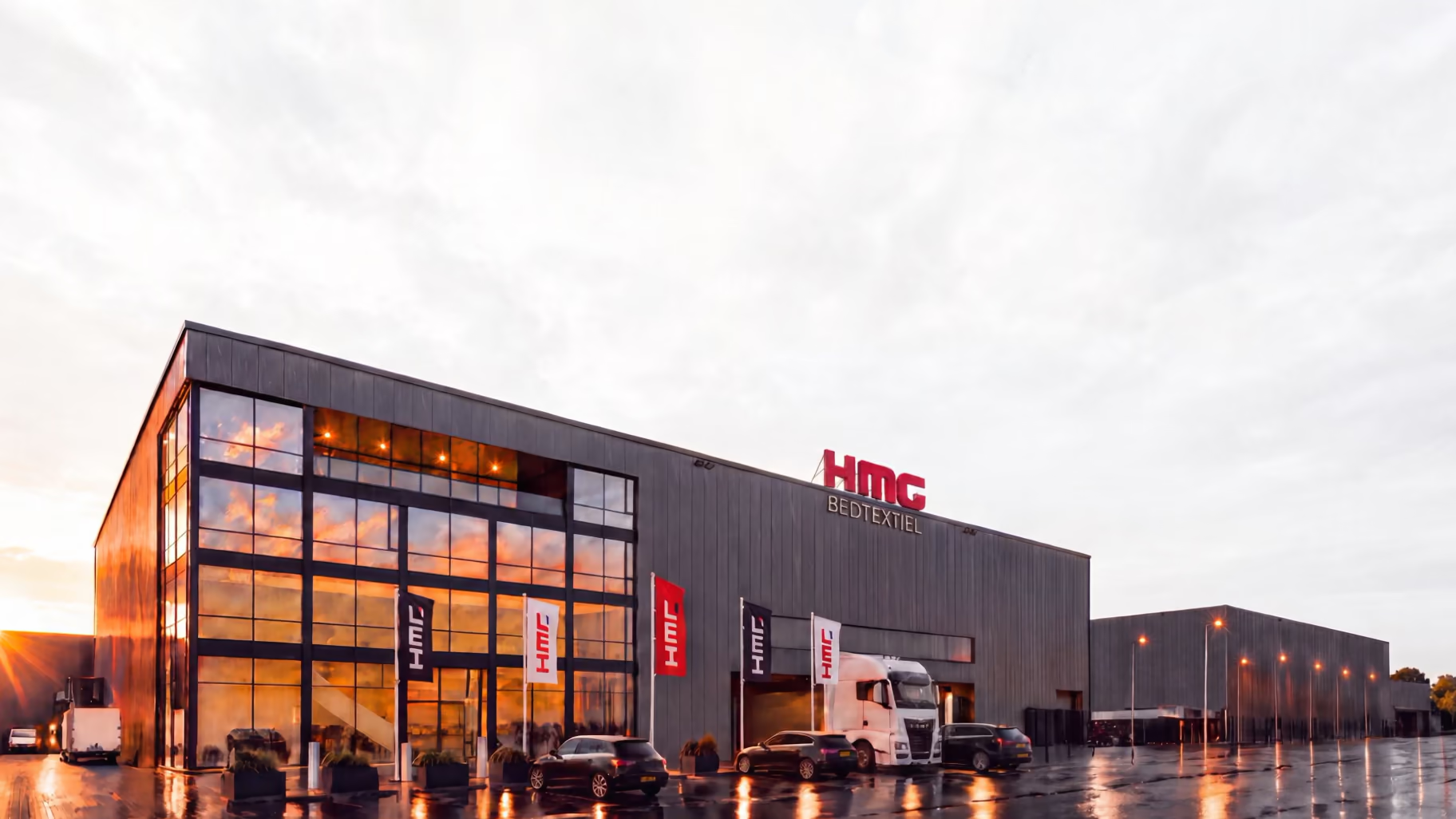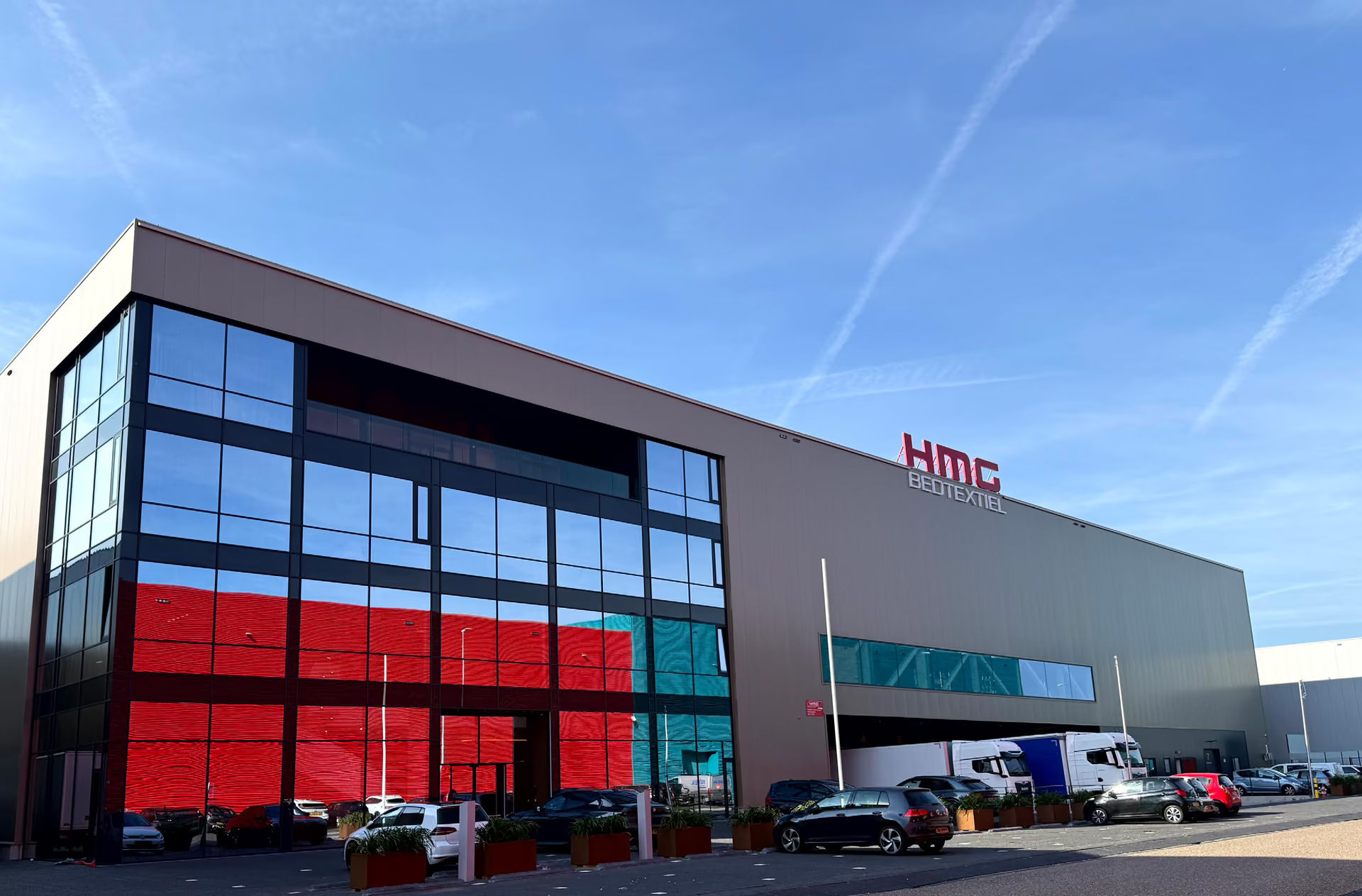
Our factory stands on Park Forum in Eindhoven: an energy-efficient 12,500 m² building with 8 fully automatic pillow lines and 4 fully automatic duvet lines. Between them, they can make up to 15 million pillows and 2 million duvets a year, 100% in the Netherlands.
For a buyer, a capacity figure on its own says fairly little. What matters is what happens between raw material and pallet: that is where it is decided whether the thousandth pillow matches the first, and whether your order leaves complete and on time. So in this article we walk through the factory in the order in which a product is made — and at each step we explain what it means for you.
Would you rather see the steps in 3D? Follow a single pillow or a single duvet through the factory. The full overview of the building, the lines and our quality control is on our Production page.
- Building on Park Forum, Eindhoven
- 12,500 m²
- Fully automatic pillow and duvet lines
- 8 + 4
- Pillows a year, at most
- 15 million
- Pallet positions in the warehouse
- 6,000
Fibre opening: the first quality step
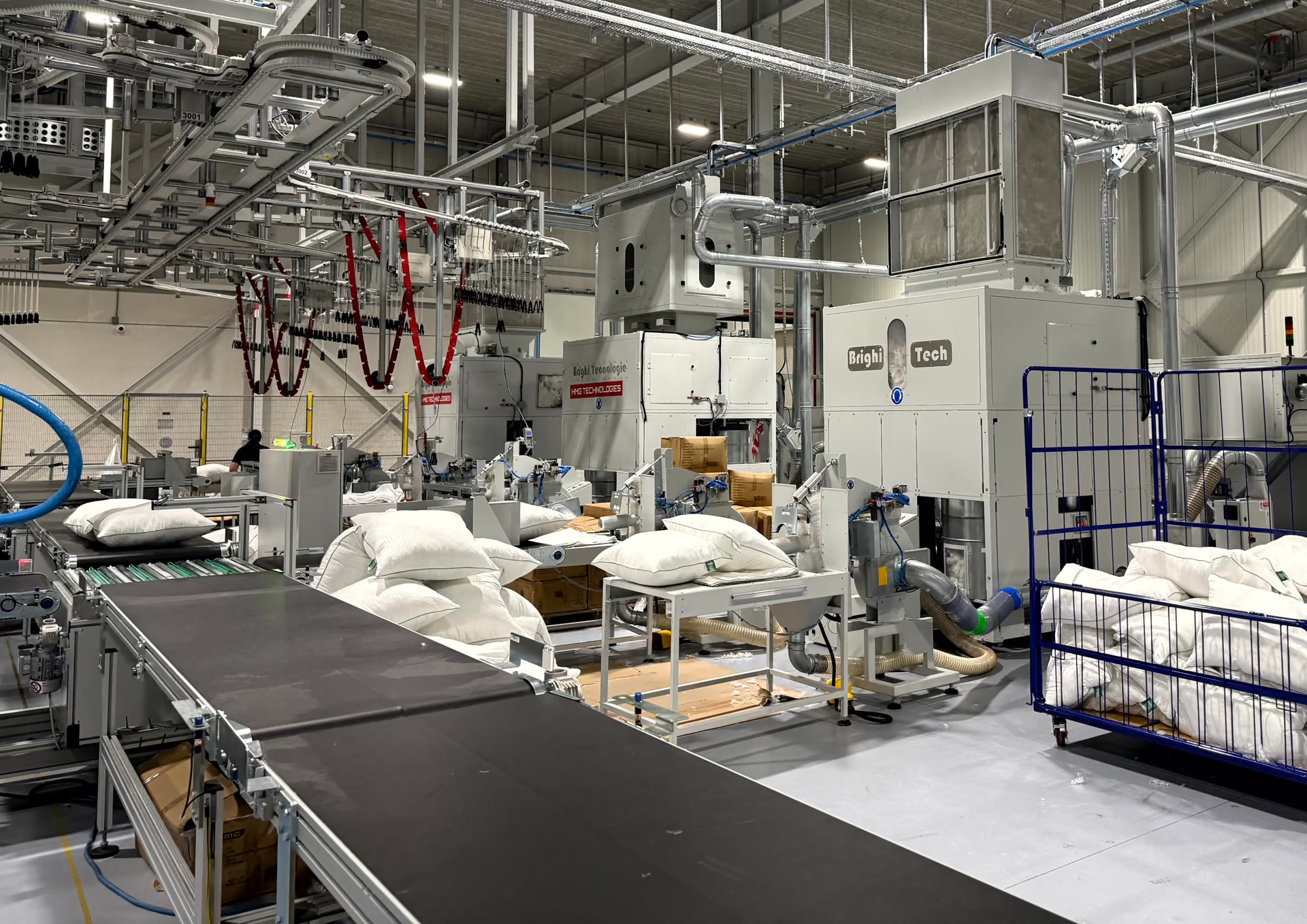
Synthetic fibre arrives in compressed bales. That makes it compact to transport, but in that state it lacks exactly what a pillow or duvet needs: air. So the fibre first goes through our fibre-opening systems, which loosen the compressed fibre and separate the individual fibres so that they regain their volume and resilience.
It looks like a preparatory step, but this is where the quality of the finished product begins. Fibre that has been opened evenly will lie evenly in the pillow: no lumps or hard spots, with the same resilience from corner to corner. That is why we use high-precision fibre-opening systems. We agree with you in advance which fibre goes into your article, and whether it needs to be certified — to GRS, for example.
Automated filling and weighing
On our eight fully automatic pillow lines, the opened fibre is blown into the cover and weighed. The weighing is no formality. Fill weight largely determines how high and how firm a pillow feels: a pillow filled slightly too light feels flatter than its neighbour on the shelf — and shoppers notice.
We set the fill weight of your article during development; from then on, the line fills to that weight, piece by piece. That is how we keep filling accuracy consistent, even at very large volumes. And the volumes are large: in 2025 we doubled the capacity of our pillow production to 25,000 pillows a day.
For you, that capacity mainly means room. A permanent line, a seasonal promotion and a programme under your own brand do not have to be split across several suppliers.
Four duvet lines and the hook line
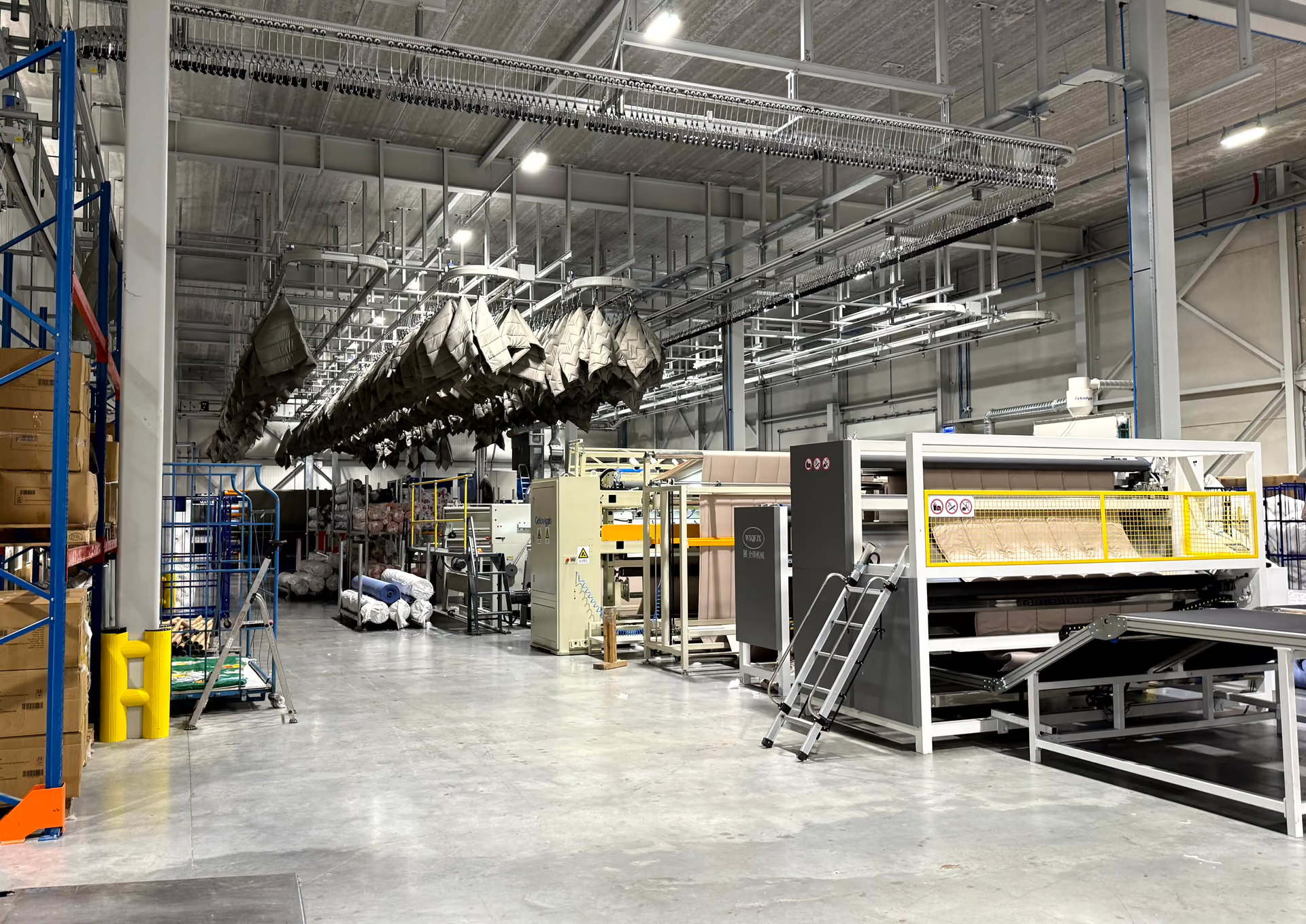
A duvet is larger and flatter than a pillow, and more sensitive to uneven filling. On our four fully automatic duvet lines, the top and bottom fabrics are therefore quilted into chambers, so that the filling stays spread across the whole duvet instead of shifting to one side. Three of those four lines were installed in 2025.
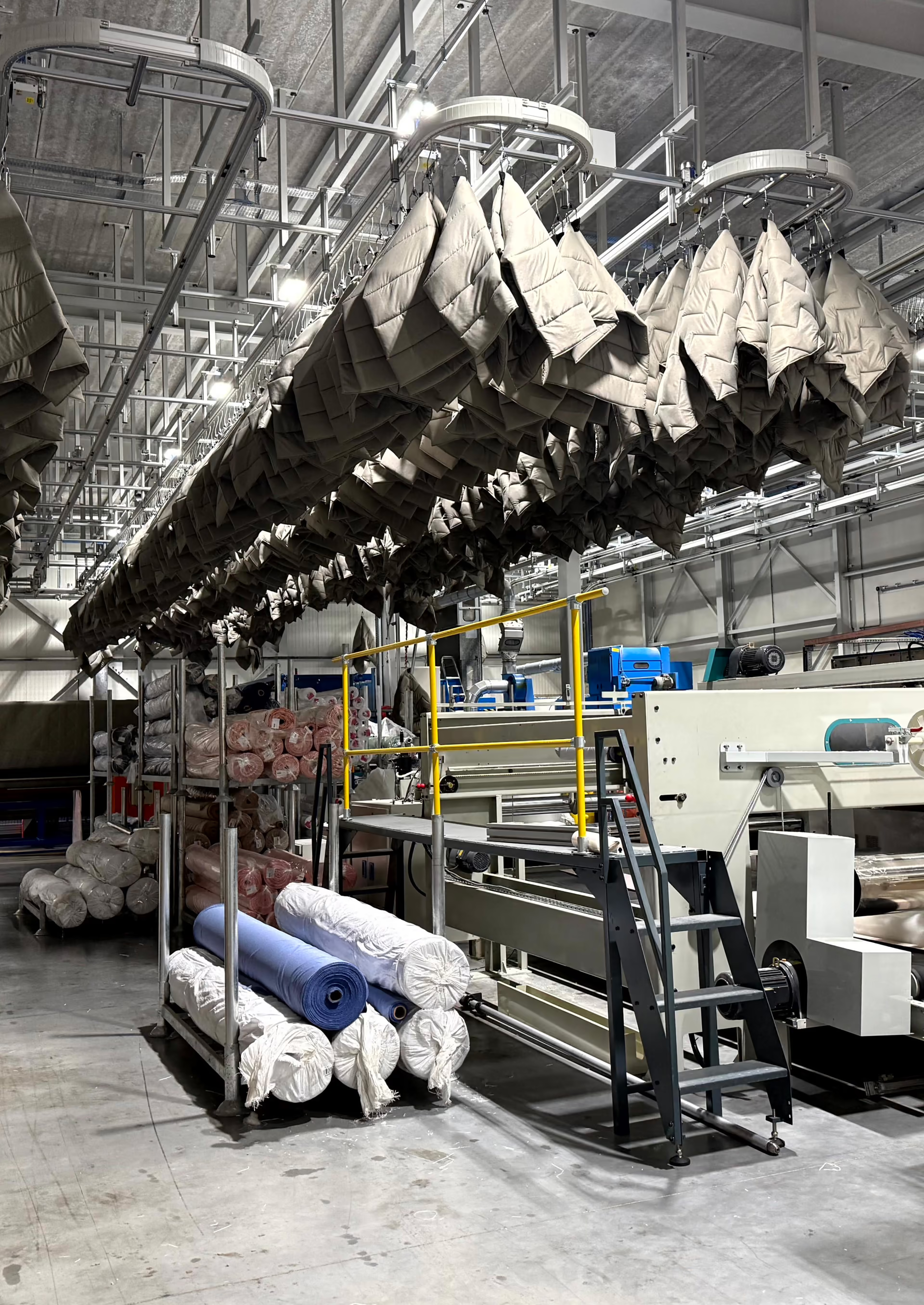
Above the production floor runs the hook line: the duvets hang from hooks and travel through the hall above the floor, from one operation to the next. Our duvet range covers synthetic and nano gel fibre as well as natural fillings such as wool and bamboo. Which filling suits your customer is the subject of our comparison of duvet fillings.
Quality at every step, traceable by batch
Quality management is built into every production step, not just the end of the line. A fault spotted during filling costs one pillow; a fault discovered in your distribution centre costs a whole delivery. That is why we check in-house, during production.
- In-house quality control — our own people check production step by step, from raw material to packed product.
- Traceable by batch — every batch can be traced, so if a question comes up about a delivery, it is clear when it was made and from what.
- Consistent filling accuracy — automated filling and weighing, so every piece gets the agreed filling.
- Standardised packaging — every order is packed in the same way.
- EU regulations and lab tests — we produce in line with European regulations and have our products tested for the markets we supply.
We agree per programme which tests and documents your market requires. Certificates and test reports are available on request; what we can demonstrate is listed on our Certificates page.
Packing and warehouse: compact and ready to ship
Roll-pack and vacuum
At the end of the line, the product is packed the way your channel needs it. With roll-pack, a pillow or duvet is compressed and rolled up; vacuum packaging draws the air out of the pack. Either way, the product takes up far less space: in the carton, on the pallet, in the truck and in the parcel for an online shopper. Once unpacked, it regains its shape.
Packaging is standardised too: every order leaves the same way, so what arrives at your warehouse matches what you approved. Which packaging suits shelf, web shop or hotel — and how your own brand appears on it — is covered in our article on packaging.
AGVs, WMS and 6,000 pallet positions
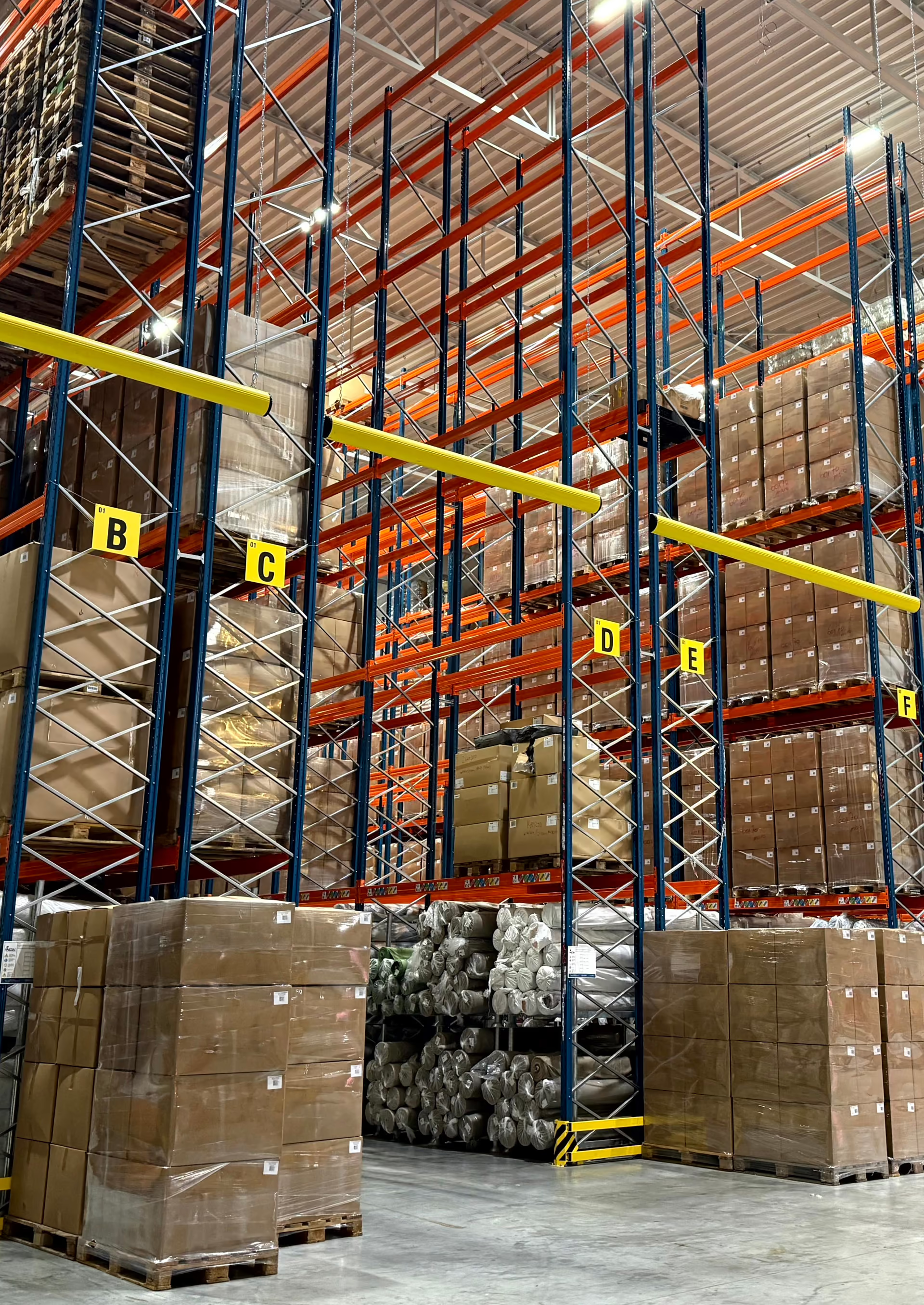
Packed products go to our warehouse, which has been expanded from 3,000 to 6,000 pallet positions. Internal logistics are automated: AGVs — automated guided vehicles that follow set routes without a driver — move the pallets to their place.
Our warehouse management system (WMS) knows where every pallet is and follows the goods from production to dispatch. For you as a buyer, that means two things: fast order processing and dispatch, and a delivery that can be traced down to batch level.
Robot-ready: our target for 2027
We keep investing. Our production layouts are already robot-ready, and our target for 2027 is fully robotised pillow production. That is a target, not yet a reality — but it is the direction in which the factory is developing: ever more automated, on the way to a next-generation smart factory.
Automation is not an end in itself for us. It is how we keep quality and cost stable at high volumes — which is exactly what a buyer asks of a manufacturer.
In short: what you notice of the factory
Consistent filling thanks to automated filling and weighing, duvets quilted into chambers, checks at every step with batch traceability, compact packaging for every channel and a warehouse with 6,000 pallet positions for fast dispatch.
Would you like to know how your product would move through our factory? Send us your briefing — product, market, quantities and timing — and we will walk through the steps with you.
Request a quote